The modern home improvement movement is no longer just about aesthetics, minimalism, or smart appliances. Today, it is deeply focused on wellness and structural health. While upgrading countertops and cabinetry can transform a space visually, the true functional upgrade happens inside those cabinets. Specifically, homeowners are entirely rethinking their relationship with daily cooking surfaces.
With growing awareness surrounding the long-term environmental and health impacts of synthetic chemical coatings, finding the safest cookware for kitchen spaces has shifted from a niche preference to a core remodeling priority.
The Shift Toward Non Toxic Kitchen Spaces
For decades, traditional non-stick pans lined with polytetrafluoroethylene (PTFE) were heralded for their convenience. However, when subjected to high heat or structural wear, these synthetic coatings can degrade, releasing microscopic particles and volatile gases into food and the air.
As a result, the criteria for premium kitchen design have evolved. Homeowners are actively seeking non toxic cookware options that offer structural durability without sacrificing thermal efficiency. The goal is to invest in heirloom-quality tools that are completely inert, ensuring that nothing leaches into meals during everyday preparation.
Evaluating Popular Cookware Materials
Choosing the ideal cooking surface requires understanding how different metals behave under thermal stress. A comprehensive cookware material comparison guide reveals distinct differences in reactivity, longevity, and safety across popular options.
Triply Stainless Steel
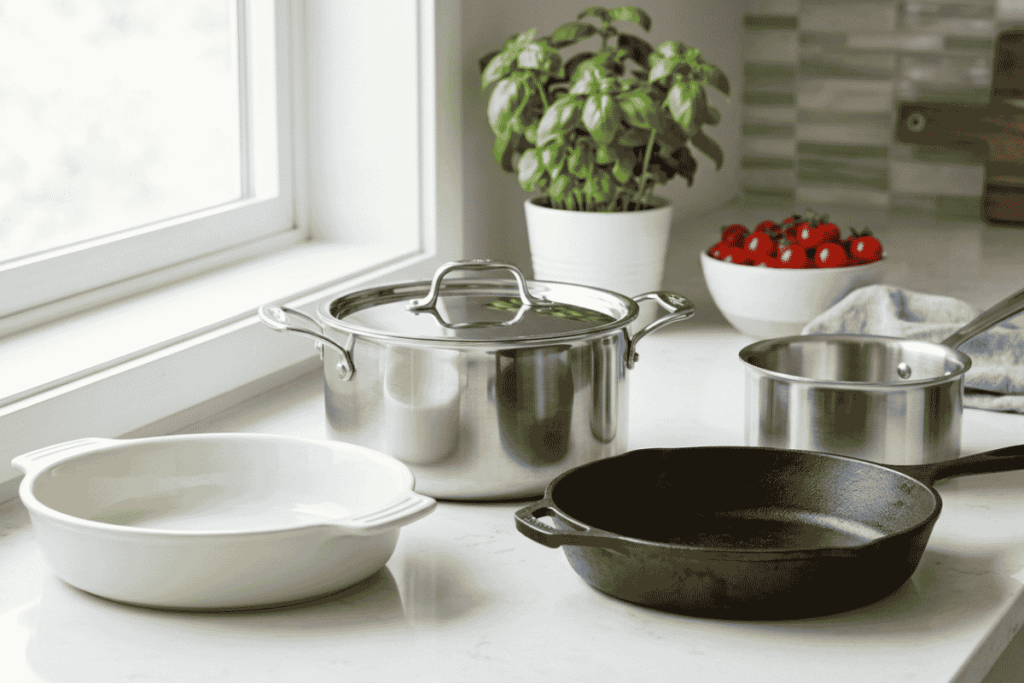
Constructed by sandwiching a highly conductive aluminum core between layers of food-grade stainless steel, triply engineering solves the historic issues of uneven heating. Because food only touches the inert stainless steel layer, it is completely non-reactive to acidic ingredients like citrus, tomatoes, or wine.
Pre Seasoned Cast Iron
Cast iron remains a favorite for high-heat searing and slow cooking. It develops a natural, polymerised oil coating over time, eliminating the need for synthetic chemical linings. While it can leach minor amounts of dietary iron into food, this is widely recognized as a health benefit rather than a hazard.
Traditional Aluminum and Non Stick Surfaces
When evaluating cast iron vs non stick cookware, the difference in longevity is stark. Non-stick pans have a definitive shelf-life and must be discarded the moment the surface scratches. Similarly, when examining stainless steel vs aluminium cookware, unclad aluminum is highly reactive to acidic foods, which can cause subtle metallic leaching over time. This makes clad stainless steel or seasoned iron far superior for long-term health.
Why Surface Stability Matters for Family Health
Selecting the safest cookware for family health involves matching your material to your specific culinary habits. While a standard multi-ply pan works beautifully for quick sautes and delicate sauces, high-heat operations like deep-frying or dry-roasting require structural setups that won’t warp or degrade.
For households that specialize in complex, high-heat regional cuisines involving heavy spice tempering and prolonged acid reduction, standard cookware often falls short. Truly optimizing a workspace for these demands requires looking closely at specialized setups. Understanding what constitutes the safest cookware for Indian kitchen setups can reveal why heavy-bottomed, non-reactive materials consistently outperform modern synthetic coatings over a multi-year lifecycle.
The Structural Benefits of Heavy Bottom Engineering
Beyond the chemical composition of the metal, the weight and thickness of a pan directly influence food safety. Lean, single-ply pans are prone to hot spots, which cause food to scorch locally and potentially release carcinogenic compounds.
Investing in robust construction yields clear heavy bottom cookware benefits:
- Uniform Thermal Distribution: Heat spreads evenly across the entire base, minimizing the risk of localized burning.
- Excellent Heat Retention: Thick bases maintain their temperature when cold ingredients are added, leading to efficient energy use.
- Warp Resistance: High-density bases resist thermal shock, ensuring the pan remains perfectly flat on induction cooktops or glass stoves.
Cookware Material Comparison Guide
To simplify the selection process during your next kitchen upgrade, this matrix outlines the safety profile and ideal use cases for the top non-toxic materials on the market:
| Material Type | Chemical Reactivity | Max Safe Temperature | Primary Culinary Use |
| Triply Stainless Steel | Completely Inert | High (Up to 260°C) | Daily boiling, searing, acidic sauces |
| Seasoned Cast Iron | Low (Minor iron transfer) | Very High (315°C+) | Slow cooking, deep frying, baking |
| Pure Ceramic | Completely Inert | Extremely High | Slow baking, simmering, stews |
| Synthetic Non-Stick | High (Degrades if overheated) | Low (Avoid above 230°C) | Low-heat delicate items, eggs |
Making an Informed Choice for Your Home
When analyzing triply vs cast iron cookware, the choice ultimately comes down to utility. A balanced, modern kitchen benefits from a hybrid approach: triply stainless steel for everyday boiling, simmering, and acidic preparations, paired with cast iron for high-heat searing and roasting.
By eliminating reactive metals and delicate synthetic coatings from your cabinets, you protect your family’s health while ensuring your kitchen remains a high-performing, sustainable space for decades to come.