When building a home in India, choosing the right material for your walls is a very important decision. It affects your home’s strength, comfort, and overall cost.
Traditionally, most homes were built using bricks. But today, cement-based options like concrete blocks and panels are becoming more popular. They offer better durability, faster construction, and improved cooling inside the house.
The Difference Between Cement Wall and Brick Wall
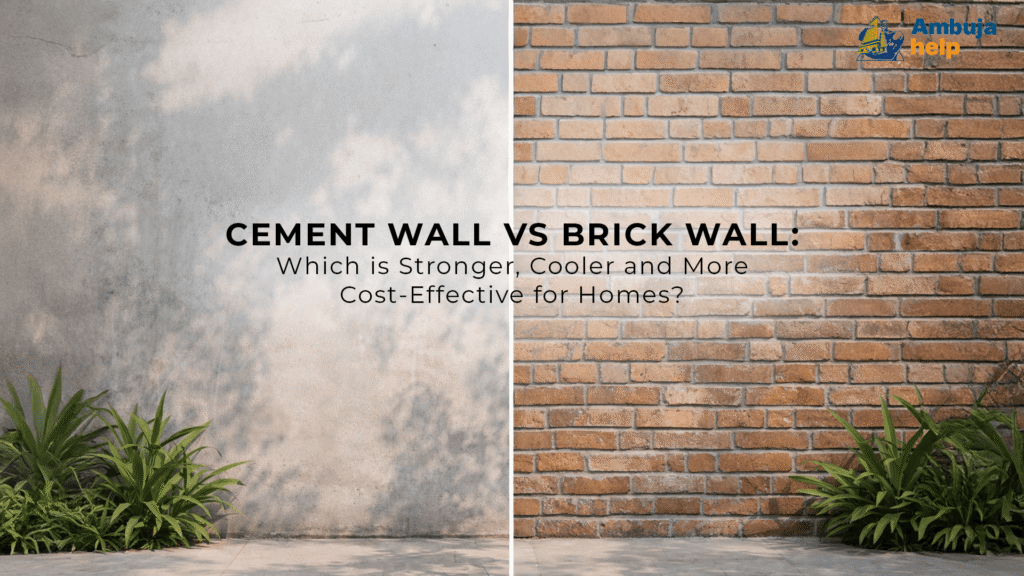
A brick wall is made by stacking small clay bricks with mortar. A cement wall, on the other hand, uses concrete blocks or panels that are made in factories under controlled conditions.
This makes cement blocks more uniform in size and strength. It also helps speed up construction and improves long-term durability.
Strength and Durability
| Aspect | Brick Wall | Cement Wall |
| Load-bearing capacity | Good | Excellent |
| Resistance to cracks | Moderate | High |
| Lifespan | Long | Very long |
| Structural consistency | Can vary | Uniform |
Brick walls have been used for years and are quite strong. However, their quality depends on the bricks used. If the bricks are uneven or weak, it can affect the structure.
Cement walls are more consistent because they are machine-made. This makes them stronger and less likely to develop cracks over time. They also work well with modern construction methods, especially for multi-storey homes
Thermal Comfort (Cooling Effect)
| Aspect | Brick Wall | Cement Wall |
| Heat absorption | Moderate | Low to moderate |
| Cooling efficiency | Good | Very good |
| Need for insulation | Sometimes | Less often |
Brick walls can keep homes cool to some extent. But modern cement-based solutions can do even better when designed properly.
One such option is Ambuja Cool Walls Concrete Blocks and Blockol, which are designed with special heat-barrier technology. These blocks can keep indoor spaces up to 5°C cooler, making your home more comfortable, especially during Indian summers.
They also help reduce the need for air conditioning, which can lower electricity bills over time.
A Smarter Alternative: Ambuja Cool Walls
Stronger, better, and cooler—Ambuja Cool Walls offer a modern solution compared to traditional bricks.
These blocks are designed to solve common problems that homeowners face with brick walls.
Why choose Ambuja Cool Walls?
- Anti-efflorescent: Prevents white salt deposits that damage walls and plaster
- Heat-proof: Keeps interiors cooler with advanced heat-barrier technology
- Faster construction: No curing required, saving time
- Strong bonding: Uses Blockol, a ready-to-use joining mortar
Unlike traditional bricks, these blocks are easy to install and reduce construction time. Over the long run, they also help save money by reducing maintenance and energy costs.
Cost and Construction Efficiency
| Aspect | Brick Wall | Cement Wall |
| Material cost | Moderate | Slightly higher |
| Labour cost | High | Lower |
| Construction time | Slower | Faster |
| Overall project cost | Can increase | Often more efficient |
At first glance, bricks may seem cheaper. But they require more mortar, more labour, and more time to build.
Cement walls, especially block systems, are quicker to install and need less labour. This helps reduce overall construction costs. Faster construction also means you can complete your home sooner.
Material Quality and Consistency
| Aspect | Brick Wall | Cement Wall |
| Quality variation | High | Low |
| Finish quality | Needs plastering | Smoother finish |
| Maintenance | Moderate | Low |
Brick quality can vary depending on where they are made. This can lead to uneven walls and more maintenance later.
Cement-based materials are more consistent and provide a smoother finish. This reduces the need for extra plastering and repairs.
Using reliable materials like Acc ambuja cement ensures better bonding, strength, and long-term performance for your home.
What Works Best for You?
If you prefer traditional construction and easy availability, brick walls can still be a good option. They are familiar, widely used, and offer decent performance.
However, if you are looking for a modern, efficient, and long-lasting solution, cement walls are a better choice. They provide:
- Higher strength
- Faster construction
- Better resistance to cracks and seepage
- Lower maintenance over time
For many urban homeowners today, cement-based walls are becoming the preferred option because they save both time and money in the long run.
A Quick Note on Cement Quality
No matter which wall type you choose, the quality of cement plays a big role in the final result. Good cement improves strength, durability, and finish.
Trusted options like Acc ambuja cement are known for consistent quality and performance. They support better construction practices and help ensure your home stays strong for years.
You can also cement order online, making it easier to plan your purchases, compare options, and avoid delays during construction.
Conclusion
Choosing between brick walls and cement walls is not about which one is “right” or “wrong.” It depends on your needs, budget, and long-term goals.
Brick walls offer a traditional approach and decent performance. But cement-based walls provide better strength, faster construction, and improved cooling—making them more suitable for modern homes.
It is also important to think beyond just the construction phase. Your wall choice will affect how cool your home stays, how often repairs are needed, and how much you spend on maintenance.
With rising labour costs and the need for quicker construction, cement-based solutions are becoming more practical. Options like Ambuja Cool Walls further improve comfort and efficiency by reducing heat and preventing common wall issues.
The best choice is one that fits your budget and gives you long-term peace of mind. By choosing the right materials and focusing on quality, you can build a home that is not just strong, but also comfortable and cost-effective for years to come.