Financial planning is an essential part of achieving long-term goals. Whether you are saving for retirement, a major purchase, or working towards building wealth, understanding how interest works is key to maximizing your financial growth. Two fundamental concepts in this space are compound interest and simple interest. While both play a significant role in calculating returns, they serve different purposes and possess unique formulas. By using tools like a compound interest formula and a simple interest calculator, you can efficiently determine your investment growth and make better decisions. This article delves into these concepts, illustrating how to use them effectively.
Understanding Compound Interest
What Is Compound Interest?
Compound interest formula is the interest earned on the initial principal amount plus any accumulated interest from previous periods. This concept essentially leverages the notion of “earning interest on interest,” which can result in exponential growth over time. Compound interest is particularly significant in investment terms because it magnifies your returns. The longer the compounding period, the greater the overall growth.
Compound Interest Formula
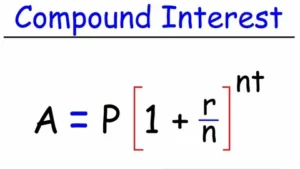
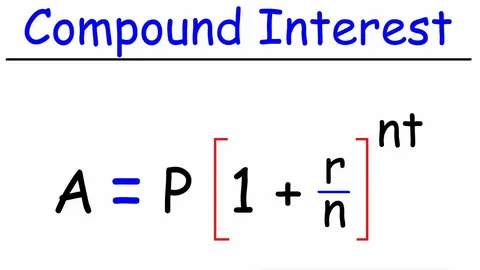
The mathematical representation of compound interest is:
A = P (1 + r/n)^(n*t)
Where:
A is the total amount, including principal and interest.
A is the total amount, including principal and interest.
P is the principal — the initial amount you invest or borrow.
P is the principal — the initial amount you invest or borrow.
r is the annual interest rate expressed as a decimal (e.g., 5% = 0.05).
r is the annual interest rate expressed as a decimal (e.g., 5% = 0.05).
n is the number of compounding periods per year.
n is the number of compounding periods per year.
t is the time the money is invested or borrowed (in years).
t is the time the money is invested or borrowed (in years).
This formula effectively captures how compounding works. It reflects how interest accrues periodically — whether annually, semi-annually, quarterly, monthly, or daily.
How to Use the Compound Interest Formula
Here’s a step-by-step guide to using the formula:
1. Identify the principal amount (P).
Identify the principal amount (P).
2. Convert the annual interest rate (r) into a decimal.
Convert the annual interest rate (r) into a decimal.
3. Determine the compounding frequency (n) and total time period (t).
Determine the compounding frequency (n) and total time period (t).
4. Plug the values into the formula to calculate A.
Plug the values into the formula to calculate A.
Example
Suppose you invest $5,000 at an annual interest rate of 6%, compounded monthly, for 5 years. Here’s how you can calculate the compound interest:
P = $5,000
P = $5,000
r = 6% = 0.06
r = 6% = 0.06
n = 12 (monthly compounding)
n = 12 (monthly compounding)
t = 5 years
t = 5 years
A = $5,000 (1 + 0.06/12)^(12 * 5)
A = $5,000 (1 + 0.005)^60
A ≈ $5,000 × 1.34885
A ≈ $6,744.26
So, the total amount after 5 years will be approximately $6,744.26, with $1,744.26 earned as compound interest.
The beauty of compound interest lies in its compounding frequency. The more frequently the interest compounds, the greater the returns.
Understanding Simple Interest
What Is Simple Interest?
Unlike compound interest, simple interest calculates interest based solely on the principal amount. It does not account for interest accrued from previous periods. While simple interest is beneficial for short-term calculations or fixed financial agreements, it does not offer the exponential growth that compound interest does.
Simple Interest Formula
The formula for calculating simple interest is:
SI = P × r × t
Where:
SI is the simple interest.
SI is the simple interest.
P is the principal amount.
P is the principal amount.
r is the annual interest rate expressed as a decimal.
r is the annual interest rate expressed as a decimal.
t is the time period in years.
t is the time period in years.
This formula is much simpler than the compound interest formula, as it does not include a compounding frequency.
How to Use a Simple Interest Calculator
A simple interest calculator simplifies the calculation process by allowing you to input values like the principal, interest rate, and time. It instantly calculates the interest amount for you.
Example
Let’s say you borrow $10,000 at an annual interest rate of 4% for 3 years.
Using the formula:
SI = $10,000 × 0.04 × 3
SI = $1,200
The simple interest earned over 3 years will be $1,200.
Key Differences Between Compound Interest and Simple Interest
Understanding the differences between compound interest and simple interest is essential for determining the best approach for your financial needs.
Growth Potential
Compound interest has higher growth potential because of the “interest on interest” mechanism.
Compound interest has higher growth potential because of the “interest on interest” mechanism, while simple interest grows linearly without compounding.
Best Use Cases
Compound interest is ideal for investments, savings accounts, and long-term financial planning.
Compound interest is ideal for investments, savings accounts, and long-term financial planning.
Simple interest is commonly used for short-term loans, credit card payments, and certain bonds.
Simple interest is commonly used for short-term loans, credit card payments, and certain bonds.
Complexity in Calculation
The compound interest formula is more complex.
The compound interest formula is more complex, while the simple interest formula is easier to compute manually or with a simple interest calculator.
Choosing the Right Calculator for Your Needs
The use of calculators is indispensable when determining financial outcomes.
Compound Interest Calculator
A compound interest calculator allows you to input key variables, including principal, interest rate, compounding frequency, and the investment time frame. It calculates the total amount, helping you analyze your investment’s growth over time.
Simple Interest Calculator
A simple interest calculator is much quicker and more straightforward. Plugging in your principal, interest rate, and time results in the calculated interest, making it ideal for gauging short-term financial commitments.
Both tools save time and eliminate the risk of manual errors.
Practical Applications of Compound and Simple Interest
Investment Planning
Use the compound interest formula for long-term investments, including mutual funds, stocks, and fixed deposits.
Use the compound interest formula for long-term investments, including mutual funds, stocks, and fixed deposits.
Loan Assessment
Employ a simple interest calculator to assess short-term loans or financial agreements.
Employ a simple interest calculator to assess short-term loans or financial agreements.
Savings Growth
Calculate the returns on savings accounts using compound interest for more realistic expectations.
Calculate the returns on savings accounts using compound interest for more realistic expectations.
Credit Card Decisions
Understand how simple interest applies in certain credit card agreements to avoid overspending.
Understand how simple interest applies in certain credit card agreements to avoid overspending.
Conclusion
Understanding and utilizing the compound interest formula and simple interest calculator is crucial for making informed financial decisions. While compound interest amplifies gains over time, simple interest offers straightforward calculations for fixed payments or short-term loans. The key lies in recognizing their differences and applying them appropriately to your financial needs.
Whether you’re planning investments or assessing loans, these formulas and calculators are powerful tools for tracking growth, forecasting financial gains, and ensuring your financial plans are backed by accurate calculations.