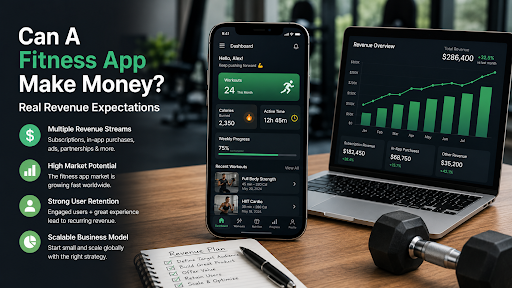
The fitness app market looks incredibly attractive from the outside. Millions of downloads, subscription plans, premium coaching, and stories about startups turning simple workout apps into multi-million-dollar businesses.
Then reality kicks in.
Most fitness apps don’t become overnight successes. Some never recover the money invested in building them. Others quietly generate consistent monthly income without ever becoming household names.
If you’re thinking about launching a fitness platform, the question isn’t simply, “Can a fitness app make money?”
A better question is:
How do successful fitness apps actually generate revenue, and what should a realistic founder expect?
Many entrepreneurs begin this journey by talking to a fitness app development company, hoping to understand both the technical side and the business potential. The truth is that monetization depends less on the app itself and more on whether people keep using it.
The Fitness App Market Is Already Huge
People are paying more attention to health than they did ten years ago.
Some want guided workouts.
Others want calorie tracking.
Some simply want accountability.
That creates room for different types of products, including:
- Home workout apps
- Running and cycling trackers
- Meditation platforms
- Nutrition apps
- Strength training programs
- AI-powered wellness assistants
Apps like MyFitnessPal, Nike Training Club, and Strava prove that users are willing to pay when they receive ongoing value.
The keyword there is ongoing.
A one-time download means very little if people abandon the app after a week.
Can You Really Make Money?
Yes.
But not every app makes money the same way.
Some rely on subscriptions.
Others build revenue through advertising or premium features.
A few combine several models at once.
The strongest products usually avoid depending on a single income stream.
Subscription Models Usually Generate The Most Stable Revenue
This has become the dominant approach across the fitness industry.
Users get basic functionality for free, while advanced features require a monthly or annual payment.
Premium features often include:
- Personalized workout plans
- Advanced analytics
- Nutrition coaching
- AI recommendations
- Exclusive video content
- Progress reports
Subscriptions create predictable recurring income, which makes long-term planning much easier.
Of course, users only keep paying if the app becomes part of their routine.
Freemium Models Bring In Large Audiences
Many successful apps remove the barrier to entry completely.
Download.
Create an account.
Start using the basics.
Only after users experience value do they encounter premium upgrades.
This works because asking someone for money before they’ve built trust is difficult.
A free version acts almost like a trial period.
The challenge is balancing free and paid features. Give away too much, and users never upgrade. Lock everything immediately, and they leave.
In-App Purchases Can Add Another Revenue Stream
Not every fitness app needs subscriptions.
Some sell individual products instead.
Examples include:
- Specialized workout programs
- Meal plans
- One-on-one coaching sessions
- Virtual fitness classes
- Digital challenges
This model works especially well when users have different goals and don’t all need the same content.
Advertising Works, But There Are Limits
Ads generate income from free users, but they can also damage the experience.
Imagine finishing a workout only to watch a thirty-second commercial before viewing your progress.
That frustration pushes people away.
Most successful fitness apps use advertising carefully, often limiting it to free accounts while keeping premium subscriptions ad-free.
Community Features Can Increase Revenue Indirectly
People often think of community tools as engagement features.
They’re also business features.
Leaderboards.
Challenges.
Friend groups.
Shared milestones.
The longer users interact with each other, the less likely they are to uninstall the app.
Retention matters because recurring users are far more likely to purchase premium upgrades.
This is one reason why platforms like Fitbit invested heavily in social and community experiences.
AI Is Creating New Monetization Opportunities
Artificial intelligence is changing fitness apps in interesting ways.
Instead of static workout libraries, some platforms now offer:
- Adaptive training plans
- Recovery recommendations
- Personalized coaching
- Smart nutrition guidance
Many users are willing to pay more for experiences that feel tailored specifically to them.
The technology isn’t replacing human trainers completely, but it does create premium features that didn’t exist a few years ago.
The Biggest Challenge Isn’t Downloads
Many founders obsess over download numbers.
Downloads are nice.
Retention is what pays the bills.
Imagine two apps:
App A gets 500,000 downloads but loses most users within two weeks.
App B gets 50,000 downloads, but half the users stay for a year.
The second business often generates more revenue.
People rarely talk about this because download statistics sound more impressive than retention rates.
But investors and experienced founders pay close attention to long-term engagement.
What Costs Should You Expect?
Building the app is only part of the investment.
Ongoing expenses usually include:
- Server infrastructure
- Feature updates
- Customer support
- Security improvements
- Marketing campaigns
- Content production
Understanding these factors early helps create more realistic expectations around fitness app development cost, especially if the platform includes AI functionality, wearable integrations, or large video libraries.
Many businesses underestimate how much work happens after launch.
Common Reasons Fitness Apps Fail Financially
Not every app struggles because of poor technology.
Often, the business model itself has weaknesses.
Some common problems include:
1. Trying To Serve Everyone
A general-purpose app often gets lost among larger competitors.
2. Too Many Features At Launch
Complex products confuse new users.
3. Weak User Retention
If people leave after a few sessions, subscriptions disappear.
4. No Clear Monetization Strategy
Waiting until after launch to think about revenue usually creates problems.
What Do Real Revenue Expectations Look Like?
This depends heavily on the product.
A niche app serving a dedicated audience may generate steady monthly income without millions of users.
Meanwhile, some heavily funded apps never become profitable.
Success usually comes from three things working together:
- A genuine user problem
- Strong retention
- A sensible monetization model
Without those pieces, even impressive technology struggles.
Final Thoughts
Yes, a fitness app can absolutely make money.
But revenue rarely comes from downloads alone. It comes from building habits, keeping users engaged, and offering enough value that people are comfortable paying for a better experience.
The most successful fitness apps don’t simply help people exercise.
They become part of a daily routine.
And once that happens, monetization starts to feel less like selling and more like supporting a service people already depend on. For web developers, this shift is especially valuable because it creates opportunities to generate sustainable revenue while continuing to deliver reliable tools, resources, and solutions that users genuinely need.