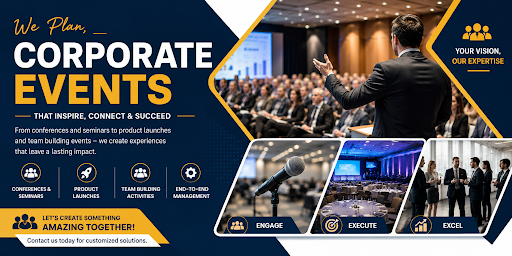
The planning of an event can be thrilling at first, but there are a lot of details, deadlines, vendor coordination, budgeting problems, and unforeseen problems that may arise. Be it a corporate conference, product launch, wedding celebration, exhibition, cultural festival, or any private get together, organizing a successful event is a difficult process that demands a lot of expertise, time and efficiency.
This is where professional event management services can be of great assistance. They make event planning a breeze and an easy stress-free process. Event professionals take the stress out of the process, from conceptualizing the event to its actual execution.
Businesses and people are turning to skilled planners for more and more memorable experiences in today’s competitive world. Knowing how an event management professional can ease the planning process can help you and your organization make the right decision about the event you’re planning.
Understanding the Complexity of Event Planning
Many people underestimate the amount of work required to organize an event successfully. What appears to be a simple gathering often involves dozens of interconnected tasks that must be completed with precision?
Some common responsibilities include:
· Venue selection and booking
· Budget creation and monitoring
· Vendor sourcing and negotiations
· Event design and theme development
· Guest management
· Catering arrangements
· Entertainment coordination
· Audio-visual setup
· Transportation planning
· On-site management
Risk assessment and contingency planning
Managing all these elements simultaneously can quickly become overwhelming, especially for individuals or organizations without prior experience.
Professional event planners bring structure and expertise to these responsibilities, ensuring smooth execution from start to finish.
Strategic Planning from the Beginning
One of the biggest advantages of hiring event professionals is their ability to create a clear roadmap for the entire project.
The planning process typically begins with understanding the client’s goals, target audience, budget, timeline, and expectations. Once these objectives are defined, planners develop a comprehensive event strategy that outlines every stage of execution.
This strategic approach helps prevent common mistakes such as:
· Last-minute decision-making
· Budget overruns
· Scheduling conflicts
· Resource shortages
· Vendor miscommunication
A well-structured plan ensures that every task is completed on time and contributes to the overall success of the event.
Professional Budget Management
Budget management is often one of the most challenging aspects of event planning. Without proper experience, costs can quickly spiral out of control.
Experienced planners help clients allocate resources effectively by identifying priorities and avoiding unnecessary expenses. They create detailed budgets that track every expenditure and maintain financial transparency throughout the project.
Their industry relationships also allow them to negotiate better rates with vendors, helping clients maximize value without compromising quality.
Through careful financial planning, clients gain greater control over spending while achieving their desired event outcomes.
Access to Trusted Vendor Networks
A successful event depends heavily on reliable vendors. Finding the right caterers, decorators, photographers, entertainers, technicians, and transportation providers can take significant time and effort.
Professional event planners already maintain established relationships with trusted suppliers. This network provides several advantages:
Better Quality Assurance
Experienced planners work with vendors who have demonstrated reliability and professionalism over time.
Competitive Pricing
Long-term partnerships often result in discounted rates and favorable contract terms.
Faster Coordination
Existing relationships simplify communication and improve operational efficiency.
Reduced Risk
Reliable vendors are less likely to cause delays, cancellations, or service failures.
Having access to a dependable vendor network significantly reduces the stress associated with event preparation.
Efficient Venue Selection
Choosing the right venue can influence the success of an event more than any other factor.
Professional planners evaluate venues based on:
· Event objectives
· Audience size
· Accessibility
· Parking facilities
· Technical capabilities
· Ambience and design
· Budget considerations
Rather than spending weeks researching options, clients benefit from expert recommendations that align with their specific requirements.
Additionally, planners often have access to venues that may not be widely advertised, providing unique opportunities for memorable experiences.
Creative Event Design and Theme Development
Modern events are expected to deliver engaging and immersive experiences rather than simply bringing people together.
Professional planners contribute creative ideas that elevate the overall atmosphere and guest experience. They develop event concepts that align with the client’s vision while incorporating current industry trends.
Creative planning may include:
· Unique themes
· Branded experiences
· Stage design
· Interactive activities
· Customized décor
· Lighting concepts
· Digital engagement solutions
These creative elements help distinguish an event and leave lasting impressions on attendees.
Time-Saving Project Management
Time is one of the most valuable resources for businesses and individuals. Organizing an event independently often requires hundreds of hours of planning and coordination.
Event professionals streamline the entire process by managing:
· Timelines
· Deliverables
· Vendor communication
· Logistics
· Documentation
· Scheduling
Instead of juggling multiple responsibilities, clients can focus on their core priorities while experts handle the operational details.
This efficient project management approach significantly reduces workload and stress.
Seamless Coordination of Logistics
Logistics form the backbone of every successful event. Even minor logistical errors can negatively impact the guest experience.
Professional planners oversee all logistical aspects, including:
· Equipment transportation
· Venue setup
· Seating arrangements
· Registration systems
· Guest movement
· Security management
· Technical support
Their attention to detail ensures smooth operations before, during, and after the event.
By anticipating potential challenges, planners prevent disruptions that could otherwise affect the event’s success.
Enhanced Guest Experience
Guest satisfaction is a key indicator of event success. Every touch point, from invitations to departure, contributes to the overall experience.
Professional event teams focus on creating positive experiences through:
Personalized Communication
Guests receive clear and timely information regarding schedules, locations, and event activities.
Smooth Registration
Efficient check-in systems reduce waiting times and improve first impressions.
Comfortable Environment
Careful planning ensures appropriate seating, lighting, climate control, and accessibility.
Engaging Activities
Interactive sessions, entertainment, and networking opportunities keep attendees involved throughout the event.
When guests feel valued and engaged, the event becomes more memorable and impactful.
Risk Management and Problem Solving
Unexpected challenges can arise even during the most carefully planned events.
Examples include:
· Weather disruptions
· Technical failures
· Vendor delays
· Transportation issues
· Last-minute cancellations
Experienced planners prepare contingency plans to address potential risks before they become serious problems.
Their ability to respond quickly and effectively helps maintain continuity and minimize disruptions.
This proactive approach provides clients with peace of mind throughout the event process.
Technology Integration
Technology has transformed the event industry by improving efficiency, engagement, and data collection.
Professional event organizers leverage various digital tools, including:
· Online registration platforms
· Event mobile applications
· Digital ticketing systems
· Virtual participation tools
· Live streaming services
· Audience engagement software
· Data analytics platforms
These technologies enhance attendee experiences while providing valuable insights for future events.
Organizations can use collected data to measure performance and improve subsequent events.
Strong Focus on Brand Representation
Corporate events serve as powerful opportunities to strengthen brand identity and communicate organizational values.
Professional planners ensure that every aspect of an event aligns with brand objectives.
This may involve:
· Consistent visual branding
· Branded signage
· Customized stage design
· Promotional materials
· Audience engagement activities
A cohesive brand experience reinforces credibility and leaves a stronger impression on attendees.
Businesses seeking professional support often turn to Event Management Companies in Delhi because of their experience in handling diverse corporate, social, and promotional events across multiple industries.
Improved Event Marketing
For public events, attracting attendees is just as important as organizing the event itself.
Professional planners often support marketing efforts through:
Social Media Campaigns
Targeted promotions help generate awareness and audience engagement.
Email Marketing
Personalized invitations and updates improve attendance rates.
Media Outreach
Press coverage increases visibility and credibility.
Influencer Partnerships
Industry influencers can help expand event reach.
These marketing strategies contribute to higher participation and stronger event outcomes.
Better Resource Utilization
Resource management is critical for event success. Poor allocation can result in wasted budgets, inefficient operations, and dissatisfied attendees.
Professional planners carefully coordinate:
· Human resources
· Equipment
· Venue space
· Financial resources
· Time schedules
Their experience helps optimize every available resource while maintaining quality standards.
This efficiency ultimately improves overall event performance.
On-Site Event Management
The day of the event often determines whether months of planning result in success or disappointment.
Professional event teams remain on-site to oversee every aspect of execution.
Their responsibilities include:
· Managing schedules
· Coordinating vendors
· Supervising setup
· Handling guest concerns
· Monitoring technical operations
· Resolving unexpected issues
Having experienced professionals present ensures that the event runs smoothly and according to plan.
Clients can enjoy the event without constantly worrying about operational challenges.
Post-Event Evaluation and Reporting
The planning process does not end when the event concludes.
Professional organizers conduct post-event evaluations to measure success and identify opportunities for improvement.
This process may include:
· Attendance analysis
· Guest feedback collection
· Budget review
· Performance assessment
· Vendor evaluation
· ROI measurement
These insights help organizations improve future events and maximize long-term value.
Why Professional Event Planning Matters More Than Ever
Modern audiences expect seamless experiences, meaningful engagement, and high-quality execution. Whether organizing a business conference, product launch, wedding celebration, or cultural event, meeting these expectations requires expertise and careful planning.
Professional event planners combine creativity, operational excellence, industry knowledge, and strategic thinking to deliver successful outcomes. Their ability to manage complexity while maintaining quality allows clients to focus on their goals rather than logistical challenges.
As events continue to evolve, the value of professional planning services becomes increasingly important for organizations and individuals seeking memorable, impactful experiences.
Conclusion
Event planning involves far more than arranging a venue and sending invitations. It requires strategic planning, budgeting, logistics management, vendor coordination, creative execution, risk management, and continuous communication.
Professional event management services simplify every stage of this process by bringing expertise, efficiency, and industry connections to the table. From initial concept development to post-event evaluation, they ensure that every detail is handled with precision and professionalism.By reducing stress, saving time, controlling costs, and enhancing guest experiences, event planners make it possible for clients to achieve their objectives with confidence. Whether the event is large or small, professional support can transform a complex undertaking into a smooth and successful experience that leaves a lasting impression on attendees with elegant Series Tags for Premium Branding