Walk into any wellness store and look at the essential oil shelf. Dozens of bottles, similar sizes, similar shapes. What makes you reach for one over another? Nine times out of ten, it’s the packaging. Not the oil inside you can’t smell it through a sealed bottle. Not the price, which you probably haven’t checked yet. It’s the box. The label. The way it looks sitting on that shelf.
Packaging in the essential oil market isn’t decoration. It’s your first conversation with a customer who doesn’t know you yet. And if that conversation isn’t compelling, they move on to the next bottle without a second thought.
Here are six tips that actually move the needle when it comes to building a brand through essential oil packaging.
1. Your Packaging Needs to Communicate Quality Before the Bottle Is Even Opened
Essential oils are a trust purchase. Customers are putting something on their skin, diffusing it in their home, sometimes using it therapeutically. They need to believe in the product before they buy it, and the packaging is doing most of that convincing.
Thin cardboard, blurry printing, labels that peel at the corners all of these send the wrong signal instantly. They say the maker didn’t care enough about the details, and if they didn’t care about the details of the packaging, why would they care about the details of sourcing and production?
Heavier stock, clean printing, and a box that closes with a satisfying firmness communicate quality in a way that no marketing copy can replicate. Customers feel it physically, and that feeling becomes associated with the product inside.
2. Choose a Visual Identity and Commit to It Completely
A lot of small essential oil brands make the same mistake early on. They pick different colors for different scents, different fonts across their range, different logo placements on different products. The idea is usually to make each scent feel distinct. What actually happens is the range looks like it came from five different companies.
Your visual identity your color palette, your typography, your logo, your overall aesthetic should be consistent across every single product you make. The scents can be differentiated within that system through small variations: a different color accent stripe, a different botanical illustration, a different scent name in the same font. But the framework stays the same.
When someone sees your lavender box on one shelf and your peppermint box across the room, they should immediately recognize that they’re from the same brand. That recognition builds over time into brand recall, and brand recall is what turns a first-time buyer into a repeat customer.
3. Your Box Tells Customers Who the Product Is For
Best essential oil storage box sell to a wide range of people yoga practitioners, aromatherapy enthusiasts, people dealing with stress or sleep issues, parents looking for natural alternatives, skincare formulators. You cannot meaningfully speak to all of them with the same packaging.
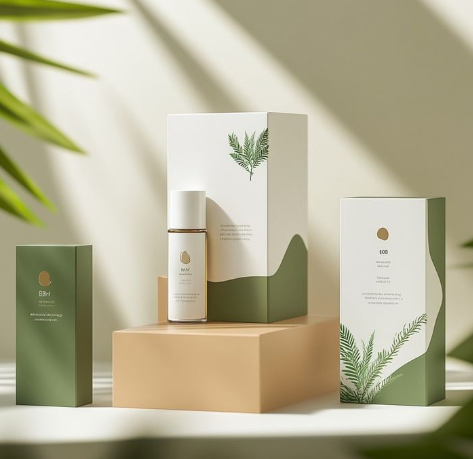
The visual language of your box the imagery you use, the colors you choose, the tone of the copy signals your target customer. Dark backgrounds with gold foil type speak to luxury buyers. Clean white boxes with minimal botanical line drawings appeal to the wellness-focused, clinical-leaning crowd. Earthy tones with hand-drawn textures attract the natural living, small-batch audience.
None of these approaches is wrong. But choosing one deliberately and designing your packaging around it consistently will always outperform trying to please everyone at once. Specificity builds stronger customer loyalty than broad appeal.
4. Use Custom Essential Oil Boxes to Protect the Product Properly
Essential oils are sensitive. UV light degrades them. Temperature fluctuations affect potency. Improper storage shortens shelf life significantly. Your packaging has a functional job to do, not just an aesthetic one.
A well-designed box keeps the bottle upright, prevents it from rolling or tipping during shipping, and creates a layer of protection against light exposure even before the customer gets it home. Custom essential oil boxes designed specifically for your bottle dimensions eliminate the movement inside the box that causes breakage, which matters enormously if you’re shipping direct to customers.
Inserts that hold the bottle firmly in place either molded from pulp, cut from foam, or die-cut from cardboard protect your product and add a premium unboxing experience at the same time. A bottle that arrives rattling around in an oversized box with crumpled tissue paper says something very different from one nestled cleanly in a fitted insert.
5. The Information on Your Packaging Builds Trust
Customers buying essential oils have questions. Is this pure or diluted? Where was it sourced? What’s the botanical name? What is it used for? How should it be stored?
The brands that answer these questions directly on their packaging clearly, honestly, without over claiming build credibility fast. Latin botanical names signal seriousness and expertise. Country of origin suggests transparency. A clearly stated usage guide or precaution note (keep away from children, dilute before applying to skin) shows that you care about your customer’s wellbeing, not just the sale.
Don’t leave your packaging as pure visual without substance. Information and design working together is what separates a brand that customers trust from one they simply try once.
6. Think About the Unboxing Experience Deliberately
Most essential oil purchases made online involve an unboxing moment. That moment is a marketing opportunity most small brands completely ignore.
Tissue paper in your brand colors, a small thank-you card written in a human voice, a printed guide to using the oil none of these are expensive, and all of them make the experience memorable. Customers who have a memorable unboxing experience share it. They photograph it. They come back.
Final Words
Building a brand in the essential oil space takes time, but packaging is one of the few places where a small maker can genuinely compete with larger companies from day one. You don’t need a massive budget you need clarity about who you are, who you’re speaking to, and what you want people to feel when they hold your product in their hands.
Get that right, and everything else becomes easier. The packaging does the talking before you ever say a word.
Also Read – How Stop Loss Strategies Help Manage Trading Risks Effectively